

What Is Land Management?

Understanding Rural Land Management and Why It Matters
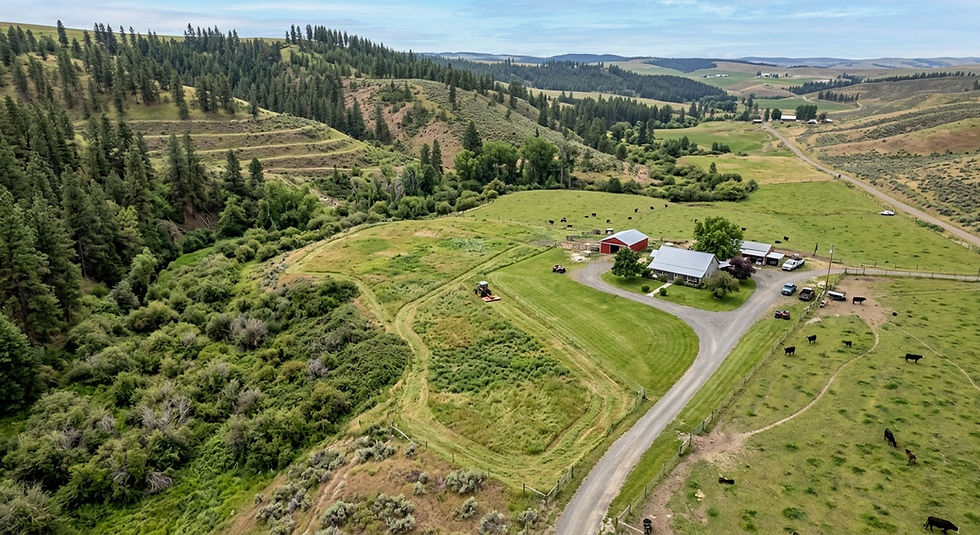
When people hear the term “land management,” they often aren’t quite sure what it means. Some think it only applies to large ranches or government forests. Others assume it’s the same thing as landscaping. In reality, land management is much broader, especially for rural and acreage properties here in eastern Washington.
At Rugged Land, land management simply means improving, maintaining, and protecting rural properties so they stay safe, usable, and easier to care for over time.
Whether it’s reclaiming overgrown land, reducing wildfire risk, restoring access to neglected areas, or maintaining fields and fence lines, land management focuses on keeping a property functional and healthy.
What Does Land Management Include?
Land management can involve many different types of work depending on the property and the goals of the landowner. Every property is different, and there is no one-size-fits-all approach.
Some common land management services include:
• Brush clearing
• Pasture mowing
• Fence line cleanup
• Blackberry and invasive species removal
• Wildfire mitigation and defensible space creation
• Trail and access road clearing
• Forestry understory cleanup
• Property cleanup and debris removal
• Light grading and terrain cleanup
• Reclaiming neglected or unusable land

For some landowners, the goal may be wildfire protection. For others, it may simply be making their property easier to maintain or restoring areas that have become overgrown over the years.
Why Rural Properties Become Overgrown
Rural land changes quickly when it is left unmanaged. Grass grows taller, brush spreads, invasive species move in, and small saplings eventually turn into dense thickets.
Over time this can lead to:
• Increased wildfire risk
• Reduced property access
• Fence lines disappearing into vegetation
• Loss of usable pasture or open space
• Increased rodent and pest activity
• Difficulty maintaining the property
• Higher future cleanup costs
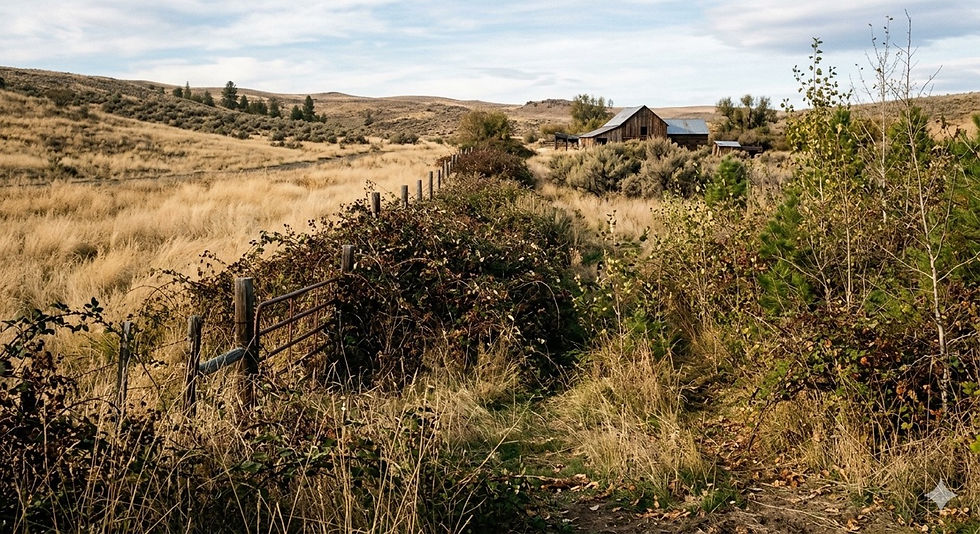
Many landowners become overwhelmed because the work grows larger every year it is postponed.
Land Management Is Not Just About Appearance
One of the biggest misconceptions about land management is that it is only done for cosmetic reasons. While a clean property certainly looks better, the benefits go far beyond appearance.
Proper land management can help:
Improve Wildfire Safety
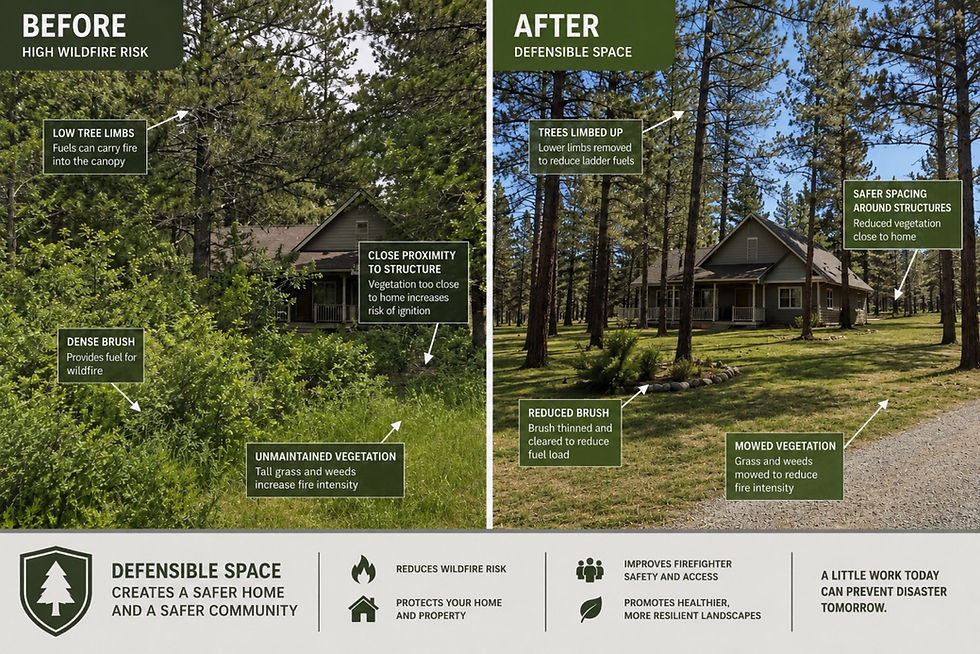
Reducing excess vegetation and ladder fuels around structures can help slow the spread and intensity of wildfire.
Restore Usable Space
Overgrown areas can often be reclaimed and turned back into usable pasture, trails, parking areas, or recreational spaces.
Improve Property Access
Clearing brush from roads, trails, and fence lines makes properties easier and safer to navigate.
Protect Property Value
A maintained property is generally easier to sell, easier to insure, and more attractive to potential buyers.
Make Ongoing Maintenance Easier
Once a property has been reclaimed, recurring maintenance is usually far easier and less expensive than starting over after years of neglect.
What Is the Difference Between Landscaping and Land Management?
This is another common source of confusion.
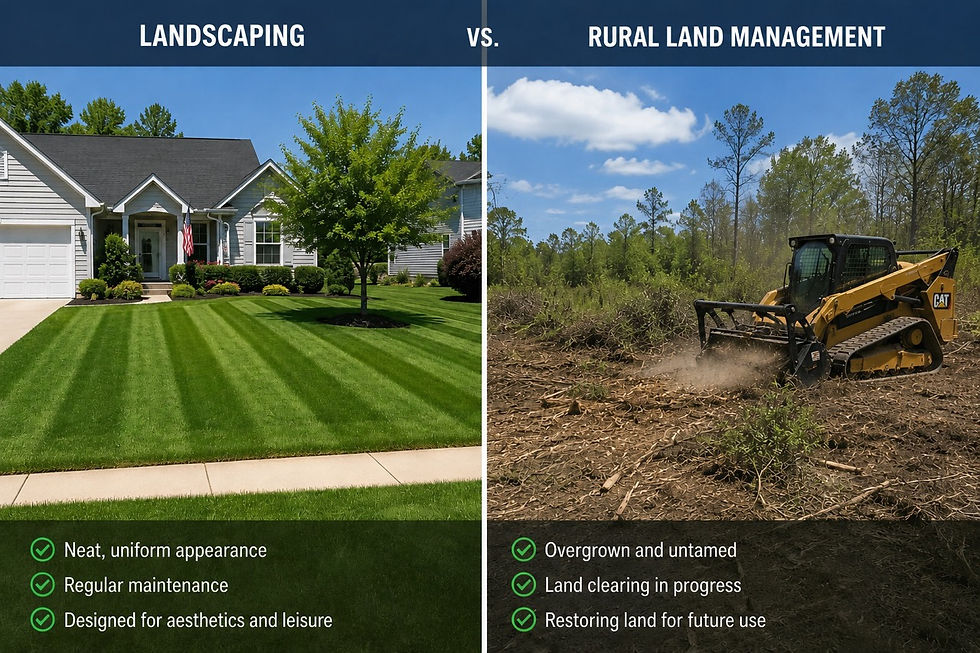
Landscaping typically focuses on residential appearance and decorative improvements such as lawns, flower beds, irrigation systems, and ornamental plants.
Land management focuses more on rural acreage properties and larger-scale vegetation control, cleanup, access restoration, and wildfire mitigation.
In many cases, land management involves rough terrain, thick vegetation, heavy brush, or difficult-to-maintain areas that traditional landscaping companies may not handle.
Every Property Has Different Goals
One of the most important parts of land management is understanding what the property owner wants to accomplish.
Some landowners want:
• Better wildfire protection
• Cleaner-looking property
• Easier maintenance
• Improved wildlife habitat
• Better pasture access
• Recreational trail access
• Preparation for future projects or construction
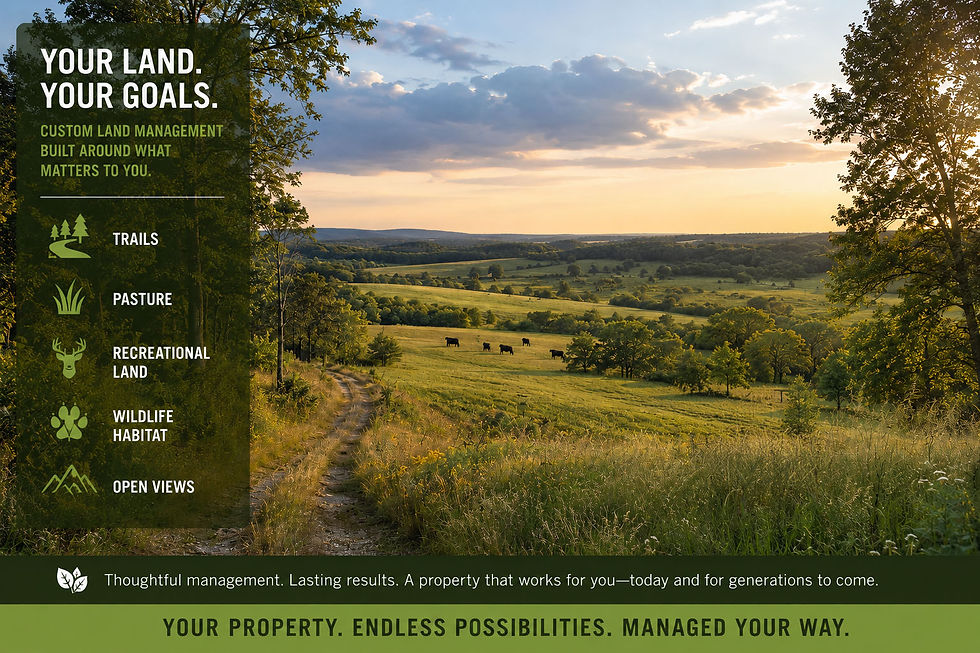
A good land management plan should reflect the unique goals of the property owner rather than applying the same approach everywhere.
Long-Term Maintenance Matters
One cleanup does not always solve the problem permanently. Vegetation naturally grows back, especially during wet seasons.
That is why many rural landowners eventually move toward recurring maintenance plans to keep properties under control before overgrowth becomes severe again.
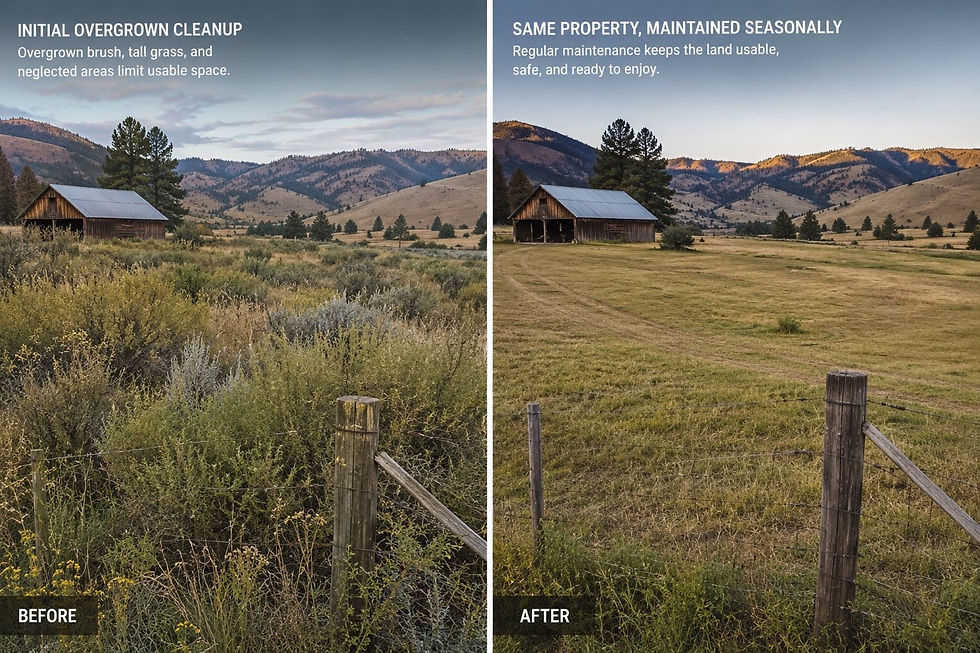
Regular maintenance is often:
• More affordable
• Easier on equipment
• Less disruptive to the property
• More effective long term
Maintaining a property a little at a time is usually easier than reclaiming it again years later.
Land Management in Eastern Washington
Properties throughout the Walla Walla Valley and surrounding areas often face unique challenges including:
• Dry summer conditions
• Rapid grass growth in spring
• Wildfire concerns
• Steep terrain
• Thick blackberry and hawthorn growth
• Neglected fence lines and pastures
Because of this, rural land management has become increasingly important for both safety and usability.
Final Thoughts
Land management is ultimately about taking care of rural property in a way that keeps it safe, functional, and manageable over time.
For some properties, that may mean mowing fields and cleaning fence lines. For others, it may involve wildfire mitigation, reclaiming overgrown acreage, or restoring access to areas that have been unusable for years.
Every property is different, but the goal is usually the same: protecting and improving the land so it can continue to be used and enjoyed for years to come.


Comments