

Ticks in Eastern Washington and Oregon: How Land Management Can Help Protect Your Property


As temperatures warm across Eastern Washington and Northeastern Oregon, many property owners begin spending more time outdoors. Unfortunately, warmer weather also brings an increase in tick activity. These small parasites can pose health risks to both people and pets, making tick prevention an important part of maintaining rural properties.
Why Are Ticks a Concern?
Ticks thrive in areas with tall grass, dense brush, overgrown fence lines, and unmanaged vegetation. They wait on vegetation and attach themselves to people, pets, and wildlife as they pass by. While not every tick carries disease, some species can transmit illnesses that affect both humans and animals.
Rural properties, wooded acreage, pastures, and neglected lots often provide ideal habitat for ticks. As wildlife such as deer, rodents, and other animals move through these areas, tick populations can increase.
Common Tick Habitat
Ticks are most commonly found in:
Tall grass and weeds
Overgrown brush and blackberry thickets
Dense vegetation along trails and fence lines
Wooded property edges
Areas where wildlife frequently travels
Properties that have not been maintained for several seasons often provide excellent conditions for tick populations to grow.
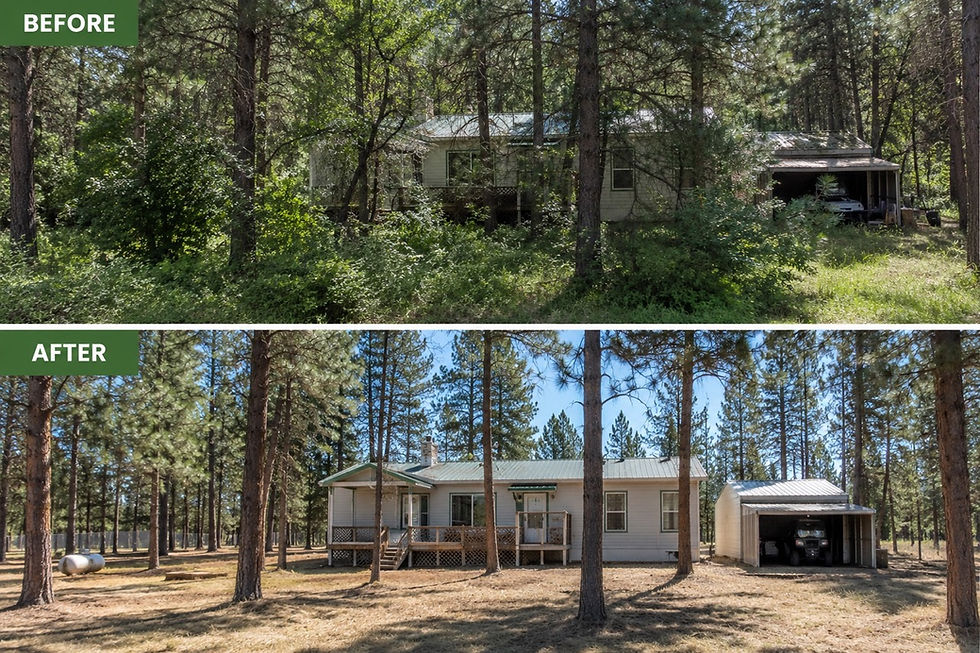
How Land Management Helps Reduce Tick Activity
While no land management service can completely eliminate ticks, reducing suitable habitat can significantly decrease tick populations around your home, shop, barn, or recreational property.
Rugged Land helps property owners reduce tick-friendly habitat through:
Removing dense brush and overgrown vegetation reduces shaded areas where ticks prefer to live.
Regular mowing keeps grass shorter and creates less favorable conditions for ticks.
Thick blackberry patches and invasive vegetation often provide ideal shelter for ticks and the wildlife that carry them.
Clearing weeds and brush along fence lines improves access while reducing areas where ticks commonly hide.
Creating defensible space around structures not only improves wildfire protection but can also reduce dense vegetation that supports tick populations.

A Healthier and More Usable Property
Property maintenance offers benefits beyond appearance. Keeping vegetation under control can improve accessibility, reduce wildfire risk, discourage unwanted pests, and create a safer environment for your family and pets.
Whether you own a small rural property or several acres of land in Eastern Washington or Oregon, regular land management can be an important part of keeping your property clean, safe, and enjoyable throughout the year.
If your property has become overgrown with tall grass, brush, blackberries, or invasive vegetation, Rugged Land offers free property walkthroughs and estimates throughout the Walla Walla Valley and surrounding areas.
Contact us today to learn how we can help reclaim your property and reduce unwanted vegetation.


Comments