

40 Acres on the Hillsides Above Walla Walla: A Major Pasture Reclamation Project


In the fall of 2025, Rugged Land completed what would become our largest project to date...a multi-phase pasture mowing and land reclamation project located on the steep hillsides near McKay Grade just east of Walla Walla.
By the time the final phase was complete, we had reclaimed just over 40 acres of overgrown pasture spread across rugged rolling terrain.
While the project itself was broken into three separate phases, the overall goal remained the same from start to finish: reduce wildfire risk, improve access and usability, and restore valuable wildlife habitat for animals such as deer and elk.
Referred by a Neighbor
One of the things we value most at Rugged Land is when customers trust us enough to recommend our services to others. This particular project actually came from a neighboring property owner whose land we had recently reclaimed and featured in a previous project blog.
After seeing the transformation next door, this landowner reached out to us about tackling several large overgrown pasture areas on their own property.

Like most of our projects, the process began with a conversation about the customer’s goals and a detailed review of the land itself. Because of the steep terrain and remote location, we explored the property by ATV to better understand the conditions, identify potential hazards, and determine the best approach for the work ahead.
The customer’s primary concerns were wildfire mitigation and improving the property for wildlife movement and grazing. Thick overgrowth had slowly taken over many of the pastures, making portions of the property difficult to access while also increasing fire fuel loads during the dry summer months.
After reviewing the property and discussing the scope of work, we returned to prepare the final estimate. The customer approved the proposal shortly afterward and we scheduled the project to begin.
Phase One: 20 Acres of Dry Grass and Heavy Brush

The first section of the project totaled approximately 20 acres and consisted mainly of tall dry grass, multiflora rose, blackberry patches, and hawthorn.
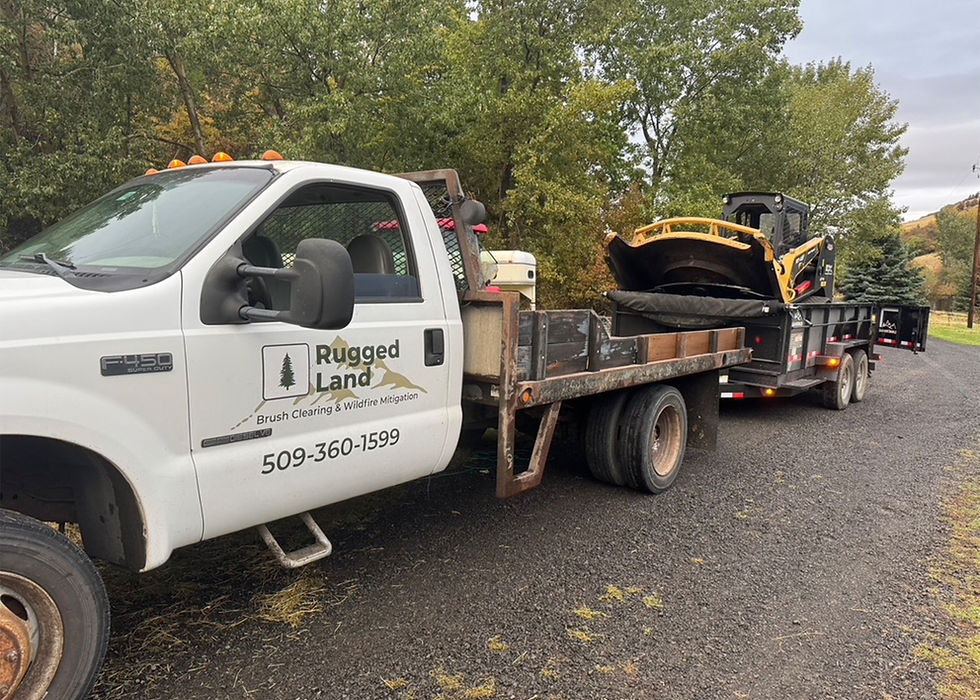
Like many rural jobs in eastern Washington, the work started early in the morning. The property itself sat far up a steep draw surrounded by rolling hillsides and rugged terrain.
For this project, the equipment setup remained fairly simple:
Ford one-ton truck
Dump trailer
ASV RT-65 tracked skid steer
Brush cutter attachment
Once the equipment was unloaded and inspected, work began immediately.
Although this phase covered a large amount of acreage, the mowing itself was relatively straightforward. There were some steeper-than-average slopes and occasional rock hazards, but overall it was a manageable pasture mowing project spread across rugged hillside terrain.

Because the work began in late summer, conditions were extremely dry. Tall grass and dusty soil created challenging visibility conditions throughout much of the project, especially during the hotter parts of the day.
Even so, the first 20-acre phase was completed in two full days of mowing.
Phase Two: Smaller Acreage, Bigger Challenges

The second section of the project totaled roughly 10 acres and was located above the original pasture area.
While this phase was smaller in size, it quickly proved to be much more difficult.

Heavy multiflora rose, dense brush, and hidden rock patches slowed production considerably. Many of the rocks were buried beneath thick vegetation and could not easily be seen from the operator’s seat, requiring slower travel speeds and constant attention to terrain conditions.
Processing the thicker vegetation also demanded more time and precision than the previous phase.

Even at only half the size of the first section, this portion of the project once again required two full days to complete safely and effectively.
Phase Three: Rain, Wind, and Hidden Hazards
By the time we reached the final phase of the project, the season had changed dramatically.
The hot dry weather of late summer had transitioned into the cold, wet, and windy conditions that often arrive in October throughout the foothills around Walla Walla.

The final section of the project totaled another roughly 10 acres and was located at the very top of the hillside.
Vegetation conditions remained similar to the earlier phases with tall grass and multiflora rose spread throughout the area. Unlike the previous section, however, there were far fewer rock hazards.
Instead, the biggest challenge became the changing weather and the hidden terrain underneath the grass.

Rain made portions of the hillside slick and difficult to navigate safely, while thick vegetation concealed steep banks and occasional sink holes that could not easily be seen until approaching them closely.
Although the acreage itself was manageable, the combination of weather and hidden hazards slowed progress enough that this final section also required two days to complete.
Over 40 Acres Reclaimed
When all three phases were complete, Rugged Land had reclaimed just over 40 acres of steep overgrown pasture spread across multiple hillsides.
Projects like this are a good reminder that large rural land management jobs are not always about difficult technical work. Often they are simply labor intensive projects that require time, consistency, attention to safety, and the right equipment for the terrain.
By breaking the work into manageable phases, the project remained practical for both our small crew and the landowner while still producing major results over time.

At the end of the final day, we loaded up the equipment, headed down the mountain, and moved on to the next project.
As always, we also followed up with the customer afterward to ensure everything met expectations and that there were no issues with the completed work.
Why Pasture Reclamation Matters
Overgrown pastures are more than just an appearance issue. Thick dry grass, brush, blackberry patches, and invasive vegetation can quickly increase wildfire risk while also reducing property usability and limiting wildlife movement.
Routine mowing and vegetation management can help:
Reduce wildfire fuel loads
Improve pasture accessibility
Open travel corridors for wildlife
Reclaim neglected acreage
Improve visibility and property maintenance
Reduce invasive brush growth over time
For rural property owners throughout the Walla Walla Valley, regular land management can make a major difference in both safety and long term property usability.

If you have overgrown pasture, brush covered acreage, or steep terrain that has become difficult to maintain, Rugged Land provides rural land management and wildfire mitigation services throughout the region.
To learn more, visit Rugged Land.


Comments